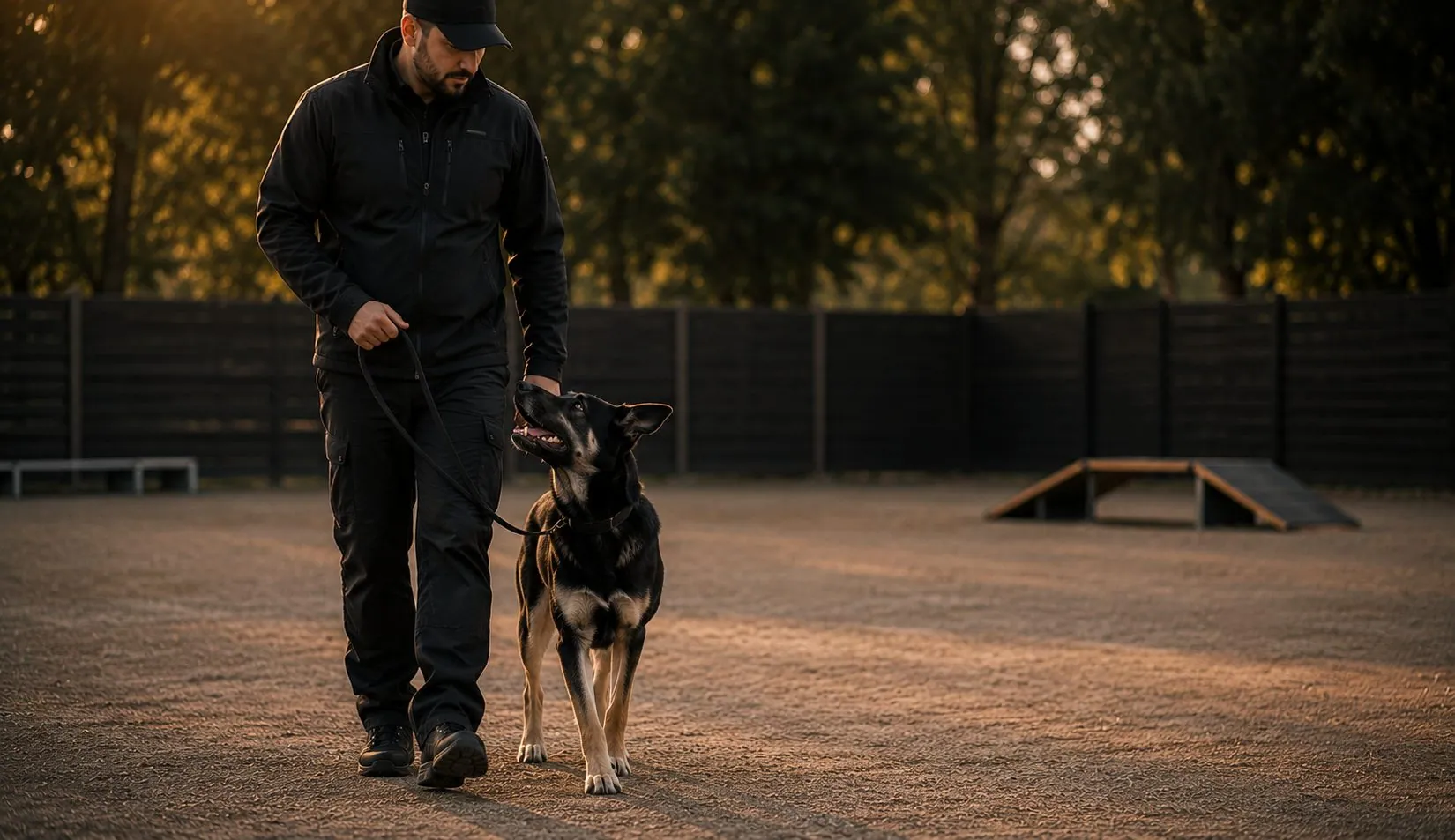
Handler Training
Dog Handler Training
A trained dog is only reliable when the person handling it understands the equipment, the dog, the routine, the motivation, and the control system behind the work.

A trained dog is only reliable when the person handling it understands the equipment, the dog, the routine, the motivation, and the control system behind the work.
Handler training teaches the person how to operate, manage, maintain, and control the dog in real life.
Leashes, long lines, crates, muzzles, reward tools, transport setup, and safety routines.
How dogs think, learn, react, stress, recover, use drive, and communicate through behavior.
Basic health awareness, feeding structure, conditioning, rest, injury signs, and first aid basics.
Vehicle routine, loading and unloading, crate and kennel use, home routine, and safe transport.
Handler position, body direction, leash pressure, line handling, and physical coordination.
Food and toy reward, drive building and reduction, reward timing, and correction clarity.
Sit, down, stay, recall, position control, impulse control, and control under pressure.
Stress signals, fear response, aggression signals, overarousal, and recovery cues.
Home, street, vehicle, public spaces, vet visits, crowds, and field work scenarios.
Maintenance drills, daily repetitions, training logs, progress tracking, and follow-up routines.
The dog may be bred, selected, trained, and prepared, but the handler is the person who drives the system in real life. Without proper handler education, equipment use, dog reading, daily management, motivation control, and maintenance work, even a well-trained dog can lose reliability. ICONK9 handler training teaches the person how to manage the dog, preserve the training, and operate the system correctly.
Equipment and Safety First
Understand the Dog Before Control
Handler Drives the System
Reliability Requires Maintenance